
Outsourcing can be one of the smartest ways to grow your business, if it’s done right. It’s not just about bringing in external support; it’s really about how well you set up the systems that enable those outsourced teams to succeed.
Many businesses run into problems not because they’ve hired the wrong people, but because they haven’t clearly defined expectations, processes, or the structure needed to guide performance.
That’s where the Outsourcing Pyramid comes in. It’s a practical framework designed to help you build a solid foundation, so your outsourced partners can deliver results that genuinely drive your business forward.
The Three Layers of the Outsourcing Pyramid
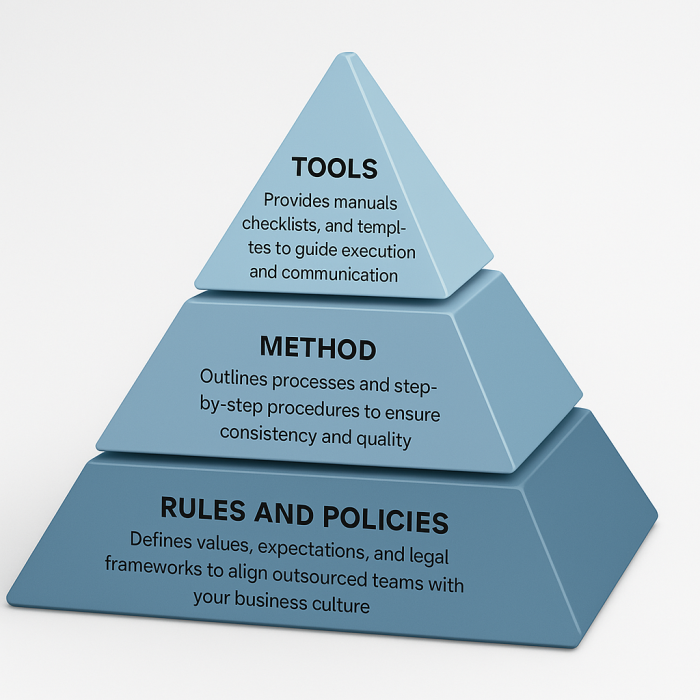
1. Rules and Policies: The Foundation
At the very base of your business structure sits the most vital layer: your rules and policies. This is where you set the course for your company, define the values you stand by, and outline what’s expected of everyone involved. It includes your mission, vision, company culture, client expectations, and legal essentials like contracts, confidentiality agreements, and non-compete clauses.
When working with outsourced providers, who are often not part of your day-to-day environment, it’s essential to clearly document your values and operational boundaries. This helps ensure everyone’s aligned and reduces the chances of misunderstandings or work going off track. Beginning every outsourcing relationship with a clear, well-communicated set of expectations lays the foundation for a successful partnership.
2. Method: Processes and Procedures
Once the foundational rules are in place, the next layer focuses on the method, how work is carried out. This includes both processes and procedures.
Processes are the logical steps that move a task from input to output. Procedures are the detailed instructions that explain how each step should be executed. Together, they form the operational backbone of your business.
For example, if a virtual assistant is responsible for backing up company accounts, the process might be “Back up company account file”, while the procedure would detail each step involved in locating, copying, and saving the file correctly.
This layer ensures consistency and quality control, allowing tasks to be completed accurately regardless of who is performing them.
3. Tools: Communication and Implementation
At the top of the pyramid are the tools used to communicate and implement your systems. These include checklists, templates, manuals, guides, and instructional videos. While many businesses begin here, tools are most effective when built upon a solid foundation of rules and methods.
Tools serve as the interface between your systems and your team. For example, a fast-food chain might have a handbook that instructs employees to ask, “Would you like chips with that?” during the sales process. This tool reinforces the procedure and ensures consistency across locations.
Every role in your business, including outsourced positions, should have a manual that outlines the processes and procedures required for success. These manuals should be part of your induction process and serve as a reference for ongoing work.
Final Words
When done right, outsourcing lets your business grow without losing quality or culture. It’s not about control. It’s about trust, backed by structure.
If you’re looking to scale your business with clarity and confidence, let’s talk. We’ve helped countless entrepreneurs build the systems that drive sustainable growth, consistent performance, and real freedom from daily operations. Schedule a call with us, we know how to help you build the structure your business needs to thrive.
